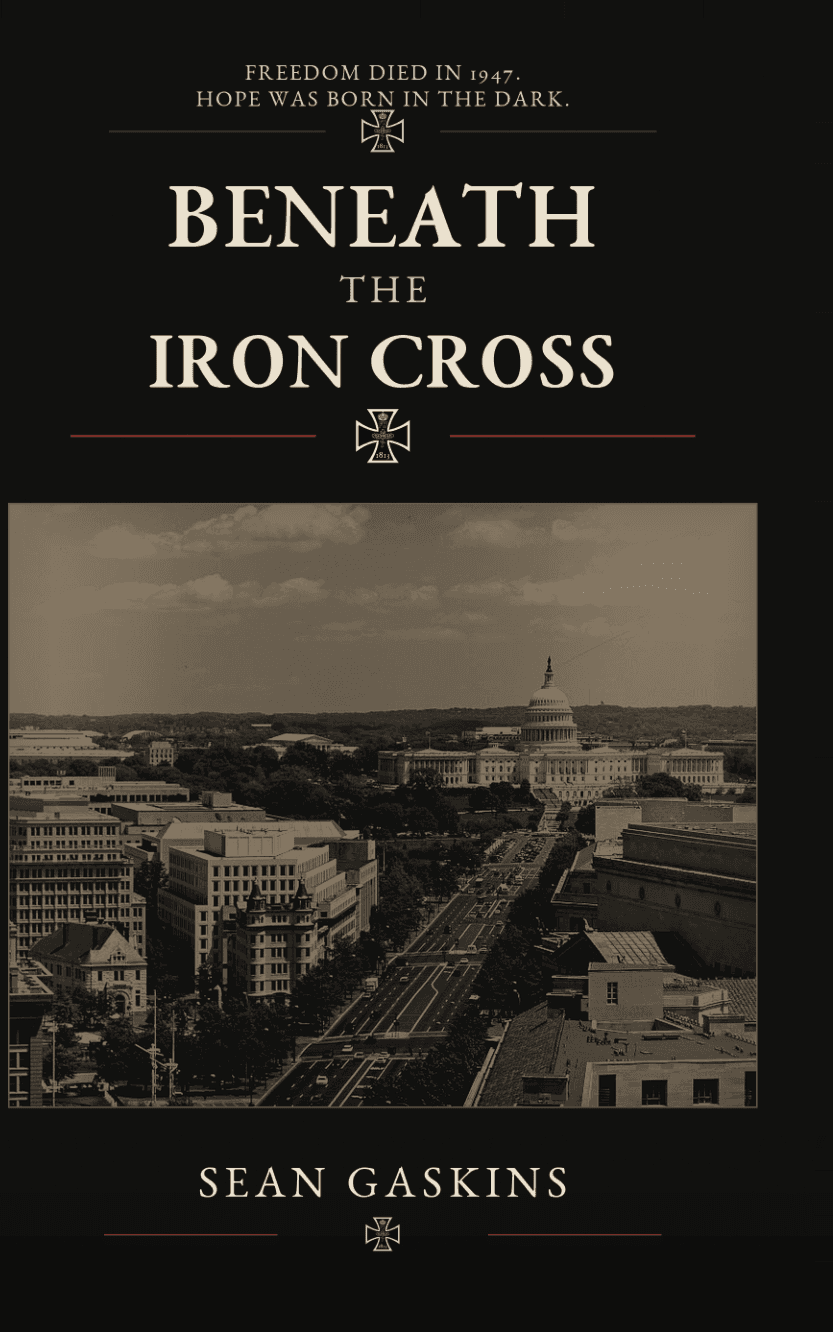
Freedom died in 1947. Hope was born in the dark.
BeneaththeIron Cross
Sean Gaskins
America lost the war. Lukas Hale is about to discover what surviving the peace will cost.
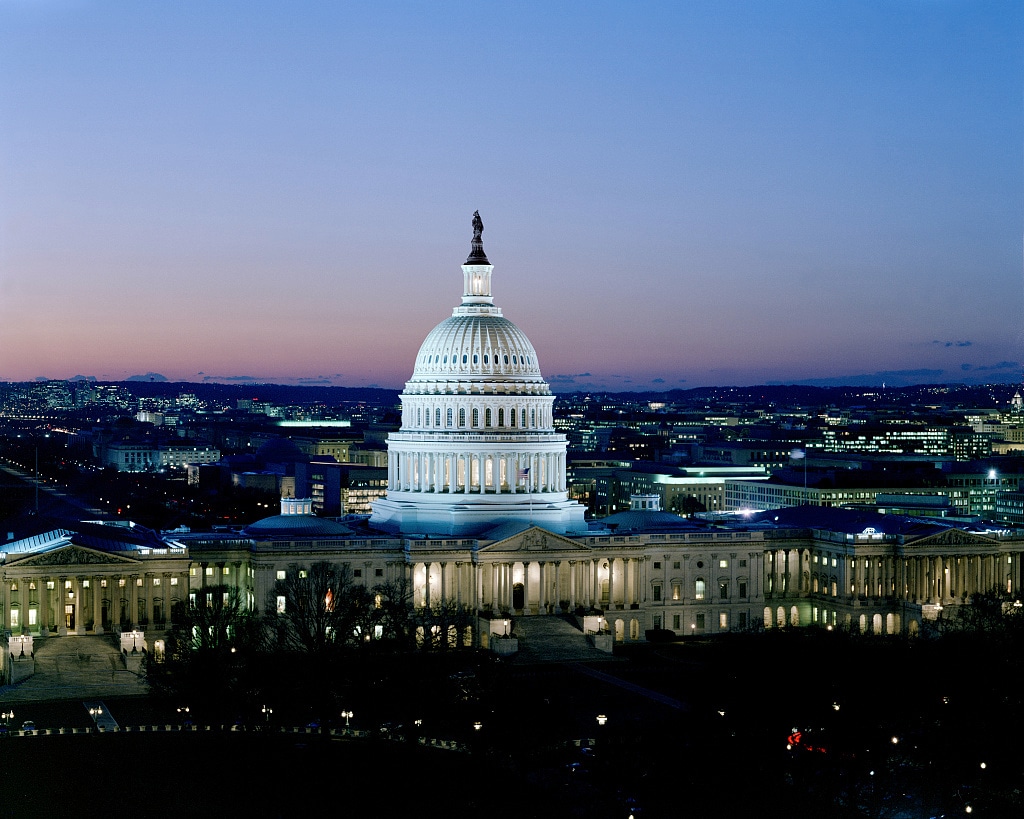
Photograph: Carol M. Highsmith, Library of Congress. Public domain. The occupation in the novel is fiction.
“Freedom does not vanish all at once. First, it learns to whisper.”
Unsigned Vox Libertatis leaflet, Washington, 1949
Fiction · January 1947
Washington falls.
In the book the war is already lost when the story opens. This paper is invented. The street it names is not.
Fiction · from the novel
District evening · Washington
January 1947
Washington falls
Government relocates west. Occupation authority declared in the capital.
Official wireless confirmed this morning that German forces hold the government quarter. The White House lawn is closed. Checkpoints divide the city into sectors.
Residents are ordered to remain indoors after dusk pending further instruction. Registration of all persons over sixteen begins at district offices.
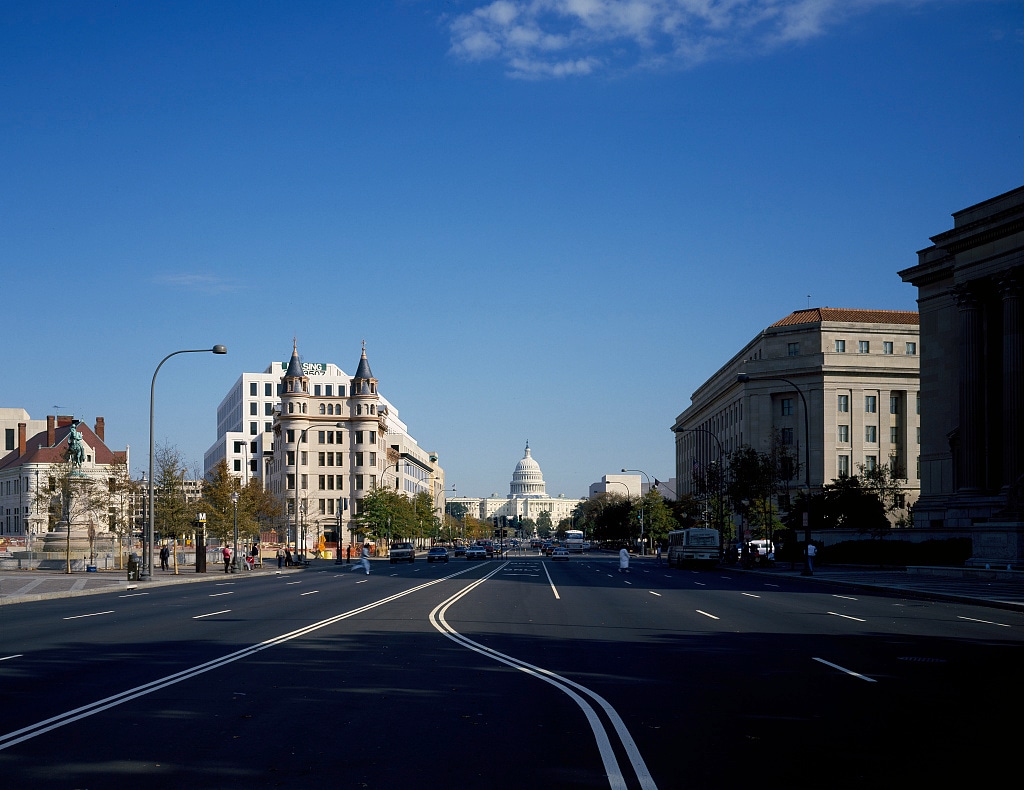
This is the street in the book.
Pennsylvania Avenue. Hale’s pawn shop is a walk from here in the novel. The photograph is real. The occupation laid over it is not.
Carol M. Highsmith / Library of Congress. Public domain.
1949
Two years after the surrender
Lukas Hale still opens the pawn shop at 8:15. He repairs watches. He pretends not to notice who disappears.
The shop
Mrs. Voss needs twelve marks
The ring is worth six. He gives her twelve. She needs blood-pressure tablets. Occupation does not pause for grief.
Under the floor
A flower shop, then a ledger
Julia sells lilies to funerals. Beneath her boards, people who should not be there keep a book of names.
Prologue
The Fall of Freedom
The first time Lukas Hale heard that America might lose the war, he was seventeen years old and trying to make a dead man’s watch tick again.
It was July of 1944. Rain pressed against the pawn-shop windows in silver threads, turning Pennsylvania Avenue into a blurred strip of headlights and umbrellas. His father had one elbow on the glass counter and his ear turned toward the radio. His mother was in the back room counting ration coupons. Somewhere far across the Atlantic, armies were chewing each other to pieces over villages Lukas had never seen and could not pronounce.
The radio announcer had the careful voice adults used when they were trying not to frighten children.
The Allied advance in France had stalled. German jet fighters had appeared in numbers no one had expected. A new class of long-range missile had struck ports in southern England. There were words like temporary, localized, and under control.
Lukas’s father reached across the counter and turned the volume down.
“Bad?” Lukas asked.
Samuel Hale looked at the watch in his son’s hand instead of the radio. “Everything’s bad when a man on the radio starts telling you not to worry.”
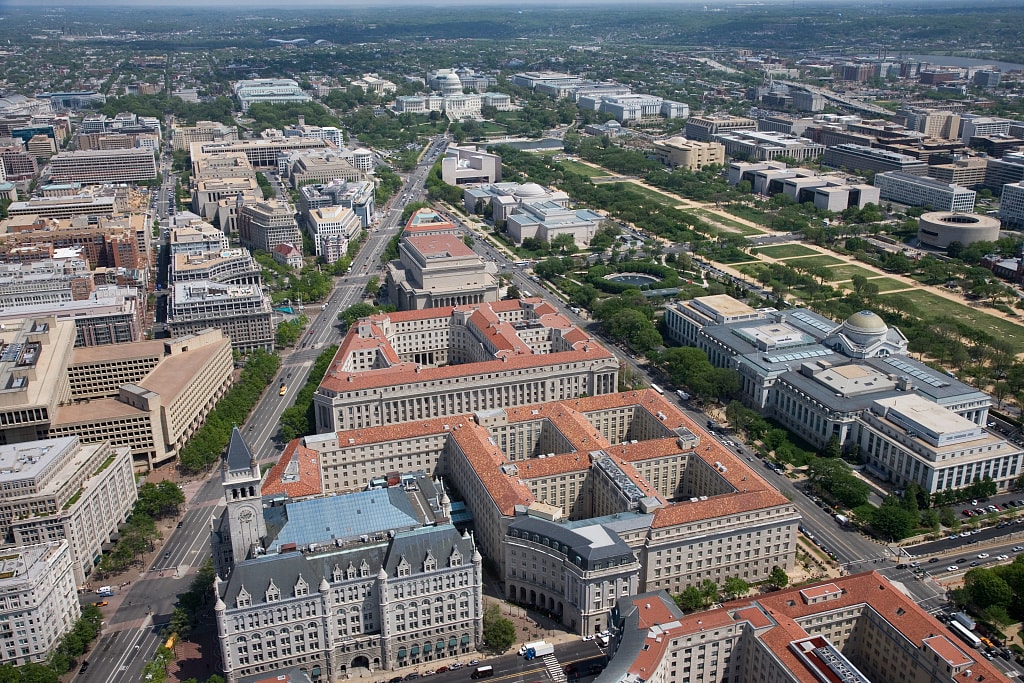
The real city
If a street is named in the novel, it existed.
Carol M. Highsmith / Library of Congress. Public domain.
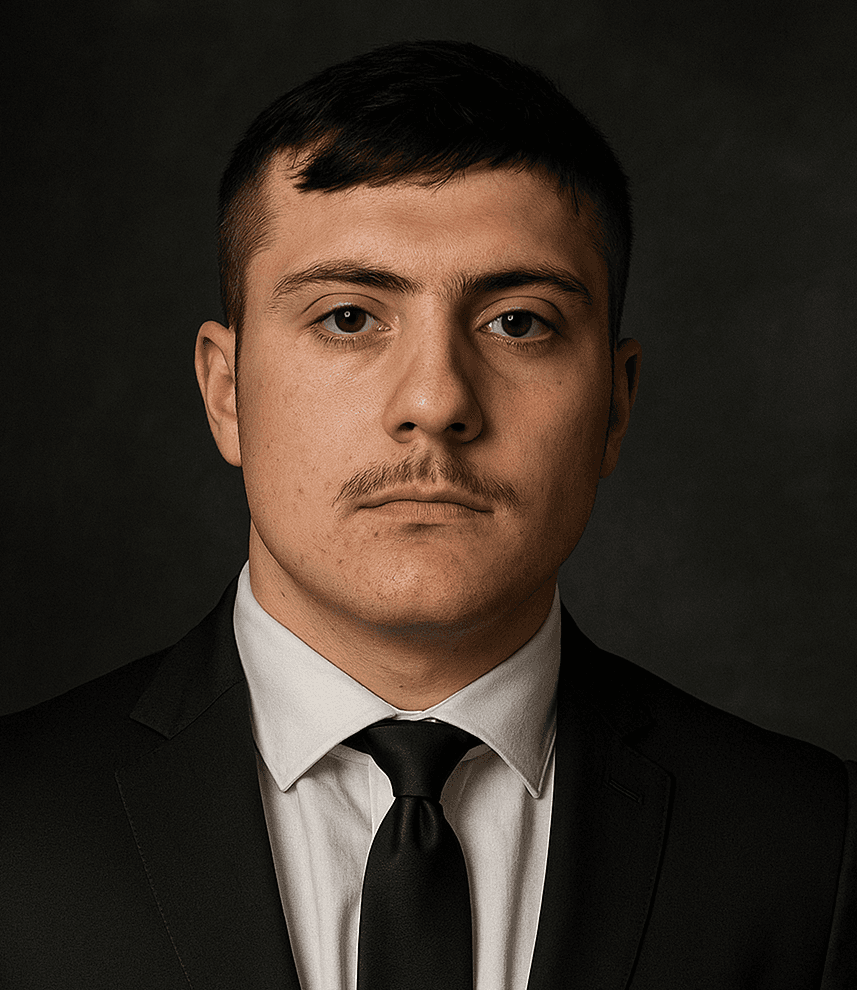
The author
Sean Gaskins
Jacksonville, Florida
Sean Gaskins is the author of Beneath the Iron Cross, a historical alternate-history novel developed over the course of more than six years.
The project began in 2019 and changed considerably as Sean returned to it over the years. What started as an idea eventually became a much larger story about occupation, survival, loyalty, fear, and the choices ordinary people make when the world around them stops being ordinary.
About the author